- 31b Great Western Road Dorchester Dorset DT1 1UF
- [email protected]

Call Us
0800 193 3933
Modern solar panels can generate more electricity from a smaller roof area, retain their performance for longer and work as part of an intelligent home energy system. For homeowners, however, the most important question is not simply which technology is newest. It is which system will perform well on their property and provide worthwhile long term value.
The latest solar panel technology available in the UK includes high efficiency N type cells, all back contact designs, improved half cell modules, bifacial panels and smarter battery storage. Other developments, including perovskite tandem cells and transparent solar glass, are promising, but they are not yet the standard choice for most homes.
This guide explains which technologies are practical today, which are still emerging and what homeowners in Dorset, Hampshire and across the South Coast should consider before requesting a solar quotation.
Solar panels generate electricity when photovoltaic cells absorb light. An inverter converts the direct current they produce into alternating current for household appliances. Today’s panels can produce more power from the same area, while monitoring platforms show how much electricity is generated, stored, imported and exported. Homeowners can also combine panels with a solar battery, an electric vehicle charger and a suitable smart tariff.
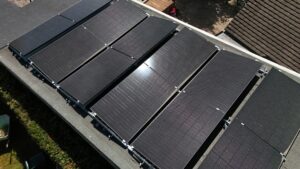
N type solar cells have become one of the most important developments in the residential market. They are designed differently from the older P type cells used in many previous generations of panel.
Depending on the model, N type panels can provide higher efficiency, lower degradation and improved performance at higher temperatures. These qualities are valuable when roof space is limited. However, homeowners should still compare the complete specification, including power output, temperature coefficient and warranties.
All back contact technology moves the electrical contacts away from the front of the solar cell. This leaves more of the front surface available to absorb light and creates a clean appearance without prominent front facing lines.
AIKO uses its All Back Contact, or ABC, technology within its current panel range. The AIKO solar panels available through My Home Solar include domestic models with published efficiencies of up to 23.8 per cent, depending on the model selected.
ABC panels may appeal to homeowners who want high output from a restricted roof area or prefer a uniform appearance. Panel efficiency is only one part of the decision, however. When comparing manufacturers such as JA Solar and Trina Solar, also consider degradation, warranties and compatibility with the proposed inverter.
Bifacial panels can collect light through both the front and rear of the module. The rear surface uses light reflected from the roof, ground or another surface beneath the panel.
These panels can be useful on commercial roofs, ground mounted arrays and carports where reflected light reaches the rear. Their benefit may be limited on a pitched domestic roof where panels sit close to dark tiles. Bifacial technology should therefore be assessed in the context of the property.
The demand for black solar panels continues to grow. Their dark cells, frame and backing can create a more consistent appearance, particularly on slate or dark tiled roofs.
An all black finish does not by itself guarantee better performance. Cell technology, efficiency and temperature coefficient remain more important. Nevertheless, modern panels increasingly combine strong performance with a discreet design.
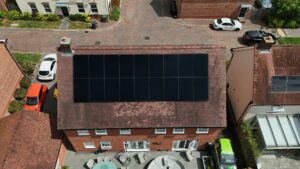
Perovskite is one of the most closely watched materials in solar research. When a perovskite layer is combined with a conventional silicon cell, the two materials can absorb different parts of the light spectrum. This creates a tandem cell with the potential to exceed the efficiency limits of a standard silicon cell.
Commercial progress is being made, but perovskite tandem technology is not yet the routine choice for UK homes. Long term durability, manufacturing scale, cost and availability will influence how quickly that changes. Homeowners do not necessarily need to postpone a project while waiting, as current high efficiency silicon panels already provide proven performance and long warranties.
Transparent and semi transparent photovoltaic materials could eventually allow windows, glass roofs and building façades to generate electricity. They may have valuable applications in offices, transport hubs, conservatories and large commercial buildings.
At present, however, transparent solar remains a specialist technology rather than a direct replacement for conventional roof mounted panels. For most homes, established rooftop modules are the more practical and cost effective option.
One of the most significant solar trends in 2026 is the move away from treating panels as a standalone purchase. A well designed system can now coordinate generation, storage, household consumption and electric vehicle charging.
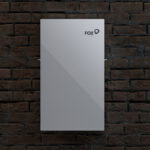
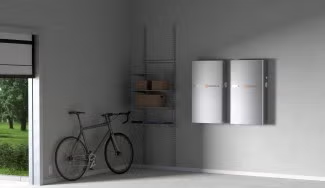
A battery stores surplus solar electricity for use later. It can help a household use more of its own generation, but it is not essential for every home. Its value depends on electricity use, tariffs and cost. A proposal should therefore compare panels with and without storage.
The Smart Export Guarantee allows eligible households in Great Britain to receive payment for electricity exported to the grid. Rates and requirements vary by supplier. Time of use tariffs can also allow a battery to charge during cheaper periods and reduce imports when rates are higher. Any savings estimate should reflect the household’s likely behaviour and current tariff terms.
An electric vehicle charger can be configured to use available solar generation, depending on the equipment. If an electric car is likely to be purchased, tell the installer so that future demand, cable routes and compatibility can be considered from the outset.
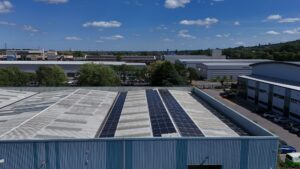
Homes in Dorchester, Bournemouth, Poole, Southampton and across Dorset and Hampshire can be well suited to solar. Southern parts of the UK generally receive more solar irradiation than locations farther north, although results still depend on the individual property.
An unshaded south facing roof normally provides the strongest annual generation. East and west facing roofs can also work well and may spread generation across the morning and afternoon. This can suit households that use electricity at different times of the day.
The design should consider roof dimensions, pitch, orientation, chimneys and dormers. A higher wattage panel can help on a smaller roof, but fitting the greatest possible number is not always the right answer.
Trees, chimneys and neighbouring properties can affect output at different times of the day and year. This is particularly relevant in established residential areas with mature trees.
A survey should identify shade before design begins. Optimisers or microinverters may reduce the effect of partial shading, but they should be recommended only where they offer a genuine benefit.
Solar panels use daylight rather than heat, so they continue to generate electricity on cloudy days. Output will be lower when light levels fall, but solar remains practical in the British climate.
For exposed coastal properties, panel specification, mounting equipment and installation quality also matter. The solution should be designed for the site rather than copied from a standard package.
Solar panels on homes in England are often classed as permitted development, but exceptions apply. Listed buildings, conservation areas and properties subject to other restrictions may need additional consideration.
This can be relevant in historic parts of Dorset and Hampshire. Check with the local planning authority where restrictions may apply. The installation must also be registered with the Distribution Network Operator, a process normally managed by the installer.
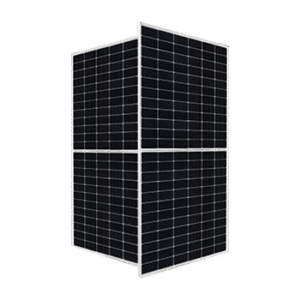
The newest panel is not necessarily the best panel for every property. Before accepting a quotation, compare the following:
A trustworthy quotation should explain its savings assumptions and distinguish between electricity used, stored and exported.
The cost of a solar installation depends on the number and type of panels, the inverter, roof access, scaffolding, electrical work and whether battery storage is included.
As a broad market guide, the Energy Saving Trust estimated in August 2026 that a typical 4.5 kWp domestic system costs around £7,600, while battery storage commonly costs around £5,000 to £8,000. These are not quotations. Your price and projected performance should be based on your property and electricity use.
Qualifying residential solar panel and battery installations currently benefit from zero rate VAT until 31 March 2027. Under existing legislation, the rate is due to return to 5 per cent from 1 April 2027. Anyone considering an installation should request an up to date quotation and allow enough time for the survey, design and installation process.
My Home Solar designs systems around each property. The team can compare current panels from manufacturers including AIKO, JA Solar and Trina Solar, while also considering inverters, battery storage and future EV charging.
As an MCS certified and RECC approved installer, My Home Solar can support homeowners from the initial assessment through to installation, handover and ongoing customer care. The company is based in Dorchester and installs systems across much of England, including Dorset, Hampshire and the wider South Coast.
If you are comparing the latest solar panel technology, request a proposal that shows what the system could generate on your own roof. Get a free solar quote from My Home Solar and discuss the most suitable panels, battery capacity and system design for your household.
High efficiency N type and all back contact panels are among the strongest established options for residential roofs. Some current AIKO models offered by My Home Solar have published module efficiencies of up to 23.8 per cent. The best choice still depends on roof space, budget and the design of the complete system.
They can be worthwhile when reflected light can reach the rear of the module. Their advantage may be limited on a conventional pitched roof where panels sit close to dark tiles. A site specific assessment is needed.
Perovskite tandem technology is moving towards wider commercial use, but it is not yet the standard residential option in the UK. Proven silicon panels remain the more readily available choice for most current installations.
Begin with a professional assessment of your roof, shading and electricity consumption. My Home Solar can then compare suitable panels, estimate annual generation and provide options with or without battery storage. Request your free quote to receive a system recommendation based on your property.